

Focus Sifter Machine Production
Screen mesh: 80-400 mesh optional
Screening layer number: 1-3 layers can be customized
Processing capacity: 100-3000 kg/h
Screening machine diameter: 400-1500 mm
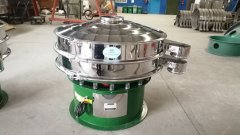
Calcium carbonate powder vibrating screen is a vibrating screen equipment specially used for calcium carbonate powder screening. It uses a vibrating motor to drive the screen to efficiently screen the powder and achieve multi-mesh grading. The equipment structure includes a screen frame, a screen, a multi-layer support system, a vibrating motor and a shock-absorbing spring. It has stable operation and high screening efficiency. Common models include XZS-800 (output of about 300-800kg/h), XZS-1200 (output of 1-2 tons/h), XZS-1500 (output of 3-5 tons/h) and XZS-2000 (output of more than 6 tons/h), which can meet the production needs from small batches to large-scale production. The price varies according to the model, number of layers and material configuration, generally between $800 and $40,000. Users can flexibly choose according to the actual working conditions.
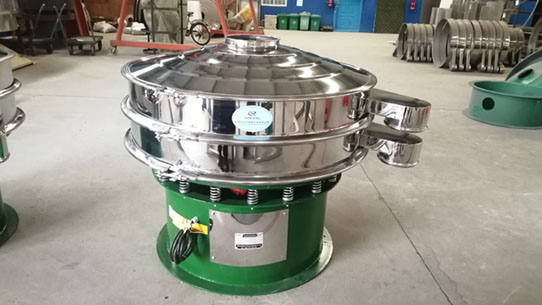
The main parameters of Calcium carbonate powder vibrating screen are as follows:
Screen size: 600×600mm to 2400×4800mm in various specifications
Screen mesh: common 60 mesh to 325 mesh, customizable screen aperture
Vibration frequency: 960 to 1500 rpm
Amplitude: 1 to 3 mm
Processing output: 500 kg/hour to more than 5000 kg/hour
Motor power: 0.75 kW to 7.5 kW
Material: carbon steel or stainless steel (food grade)
Number of screen layers: single layer to multiple layers, supporting multi-stage screening
Equipment weight: ranging from tens of kilograms to hundreds of kilograms depending on the model
Working environment temperature: suitable for normal temperature and some high temperature environments
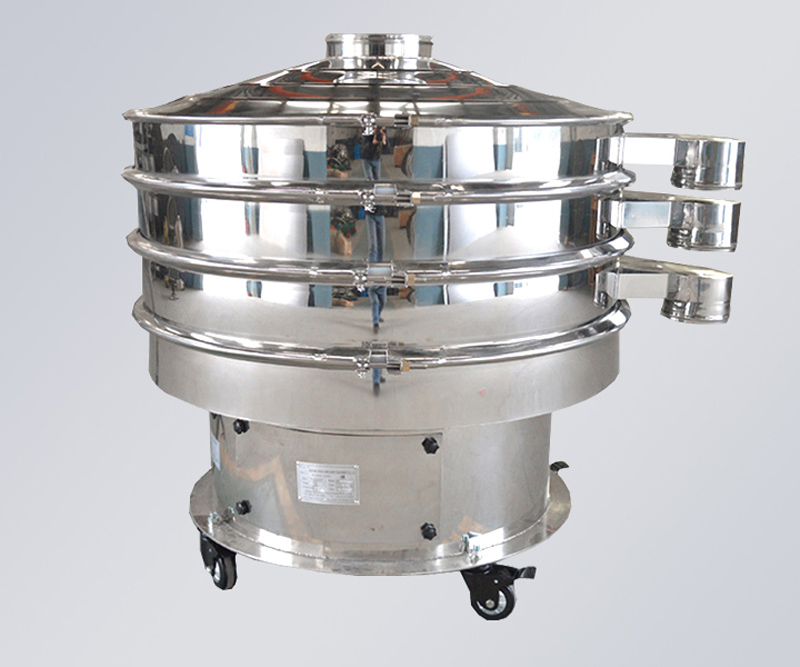
alcium carbonate powder vibrating Screen price description:
Small model (≤500kg/h): single-layer vibrating screen, suitable for laboratory or small-scale use with a daily processing capacity of less than 500 kg, the price is about US$800-2500.
Medium model (500kg/h-3t/h): double or three-layer screen, suitable for medium-volume industrial production, with a daily processing capacity of 500 kg to 3 tons, the price is about US$3000-15000.
Large model (≥3t/h): multi-layer high-output model, suitable for large-scale continuous production lines with a daily processing capacity of more than 3 tons, the price can reach more than US$15000-40000.
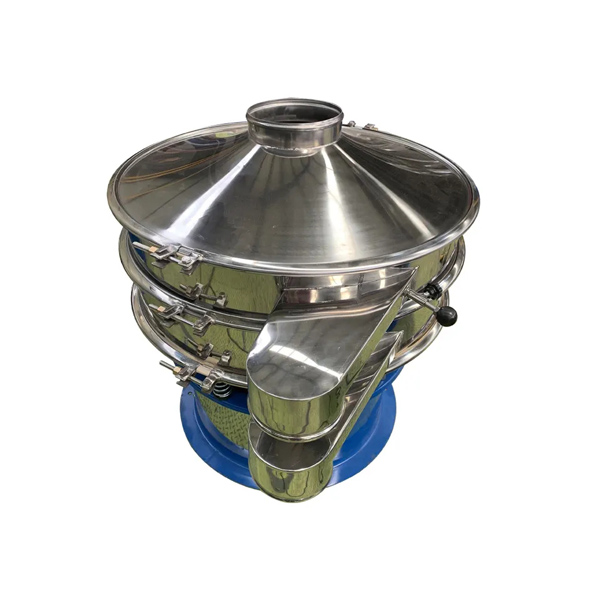
The selection of Calcium carbonate powder vibrating screen should be considered comprehensively in terms of output, particle size, material, environment, maintenance and budget:
Clear output demand: Determine the required processing capacity based on daily production, and select the appropriate screen surface size and motor power.
Determine the powder particle size: According to the fineness requirements of the final product, select the corresponding screen mesh number and screen layer number. Single layer is suitable for coarse screening, and multi-layer is suitable for graded screening.
Material selection: High-purity or food-grade calcium carbonate should be made of stainless steel to prevent secondary pollution. Carbon steel can be used for ordinary industry.
Budget range: Combined with production and performance requirements, rationally plan investment to avoid blindly pursuing high-end equipment.
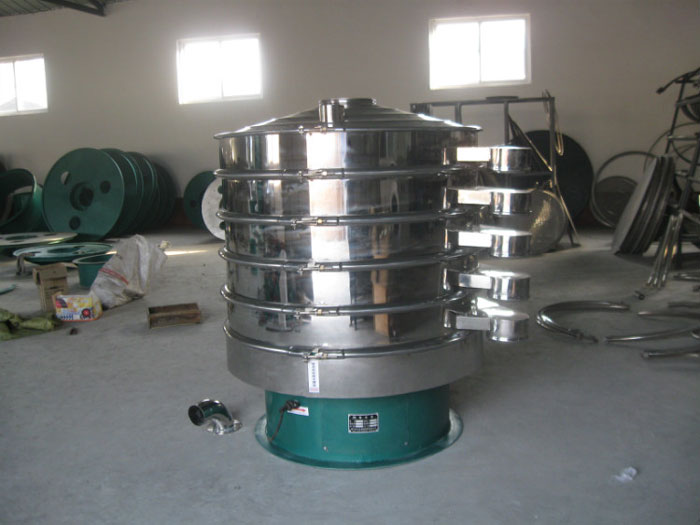
In the calcium carbonate industry chain, the vibrating screen runs through the three major links of raw material pretreatment, product grading and tailings recovery:
Raw material pretreatment: used to remove impurities and coarse particles in heavy calcium carbonate to ensure the purity of raw materials.
Product grading: According to the needs of downstream customers, calcium carbonate powder is divided into different particle size grades, such as 200-400 mesh fillers in the papermaking industry, and 600 mesh ultrafine powders are required in the coating industry.
Tailings recovery: secondary crushing and re-screening of coarse particles produced by screening to improve raw material utilization.
Taking a calcium carbonate production enterprise as an example, after the introduction of the rotary vibrating screen, the product qualification rate increased from 85% to 98%, saving more than 2 million yuan in raw material costs annually.