

Focus Sifter Machine Production
Material selection: 304 stainless steel
Number of screen layers: 1-3 layers can be customized
Number of screen mesh: 20-500 mesh optional
Processing capacity: 100-3000kg/hour
Net cleaning method: ultrasonic net cleaning device
Sealing structure: fully enclosed without dust leakage
Sanitary design: in line with food grade standards
The Food Grade Vibrating Screen Standard is a specification specifically formulated for screening equipment in the food industry, covering safety, hygiene and performance requirements. Common models include DH rotary vibrating screen (suitable for fine powder), DZSF linear screen (suitable for granular materials), and DHC ultrasonic screen (for high-precision micro powder screening). In terms of parameters, the screen surface diameter ranges from 400mm to 2000mm, supports 1-5 layers of screens, motor power ranges from 0.25kW to 2.2kW, and the screening accuracy can reach up to 400 mesh. The price varies depending on the model and configuration, roughly between $1,500-$10,000. The equipment must be made of 304 or 316L stainless steel and mirror polished to ensure corrosion resistance and non-toxicity. The structural design is easy to clean and disassemble, and it is a key equipment to ensure efficient and hygienic food production.
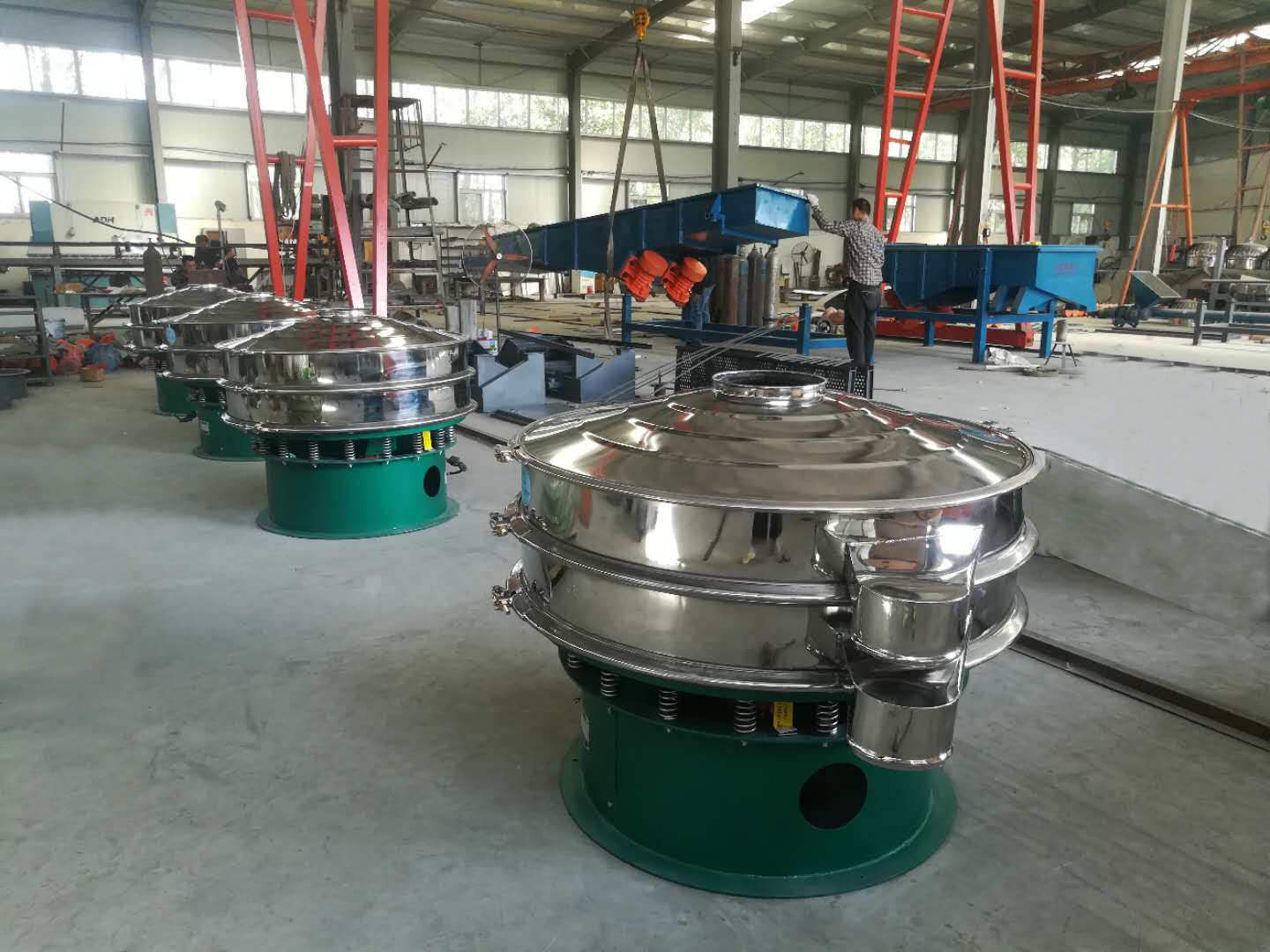
The Food grade vibrating screen has extremely high safety standards in material selection, and it must be ensured that no harmful substances are released from the part that comes into contact with food. The following are the material selection requirements:
Stainless steel material: 304 or 316L stainless steel is commonly used; strong corrosion resistance, not easy to rust; no chemical reaction with food, safe and pollution-free; 316L has stronger acid and alkali resistance and antibacterial ability, suitable for industries with high hygiene requirements.
Surface treatment: mirror polishing or electrolytic polishing must be performed; reduce residue adhesion, convenient cleaning and disinfection.
Screen material: food-grade polyurethane, nylon mesh or stainless steel woven mesh is selected; take into account screening accuracy and service life.
Seals and accessories: Use silicone or rubber seals that meet FDA standards; non-toxic, high temperature resistant, no odor, to ensure food safety.
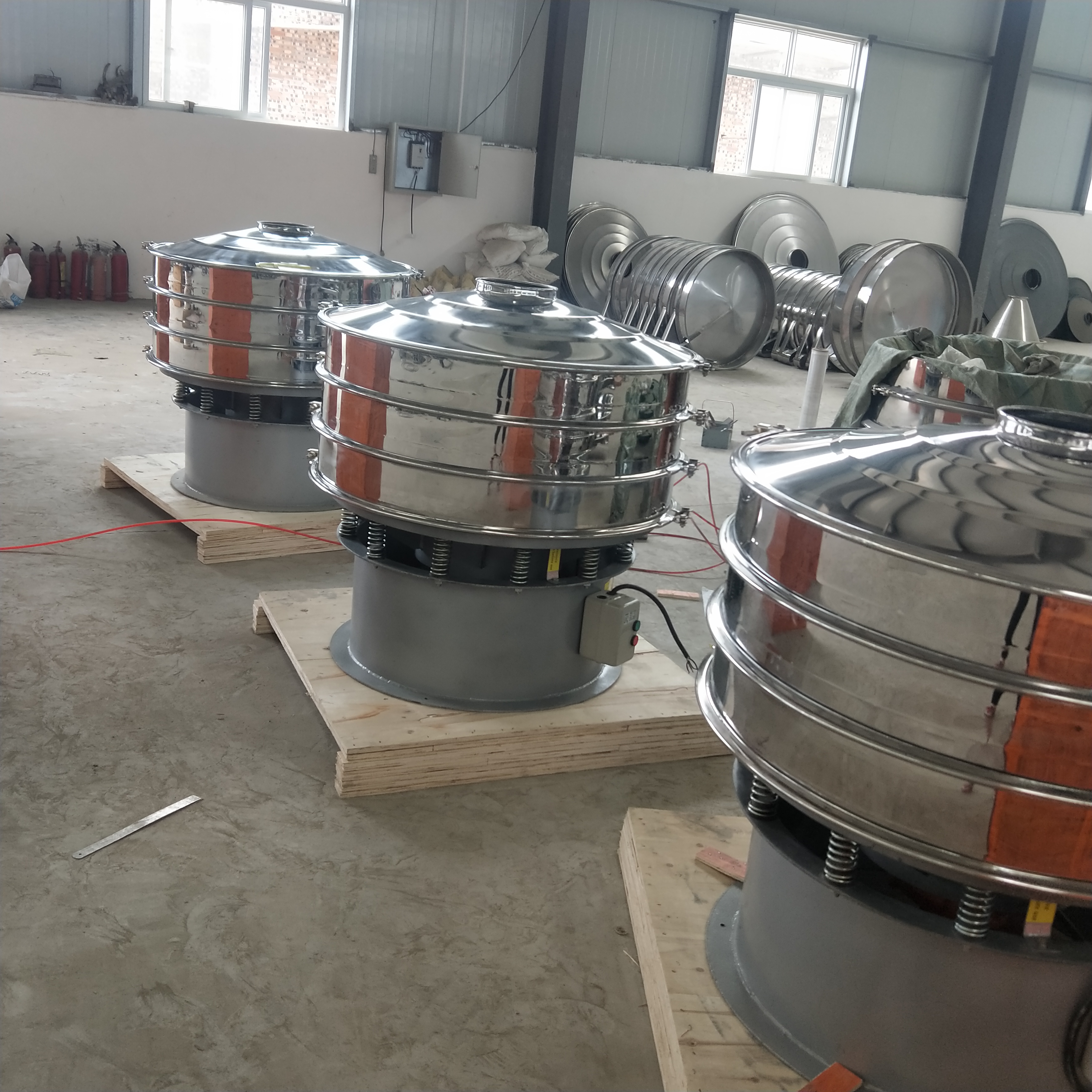
Common Food grade vibrating screen models can be divided into the following categories according to structure and function:
Vortex vibrating screen (DH type): suitable for high-precision screening of fine powder foods, such as milk powder, starch, etc.; screening accuracy can reach 325-400 mesh, and the output of a single machine is generally between 100kg and 3 tons per hour depending on the model.
Linear vibrating screen (DZSF type): suitable for large-scale screening of granular materials, such as beans, sugar granules, etc.; the screening range is 2200 mesh, the output can reach 500kg to 10 tons per hour, suitable for continuous production line use.
Ultrasonic vibrating screen (DHC type): suitable for high-precision screening of fine powders, such as seasoning powder, additives, etc.; it can be screened to 500 mesh, effectively preventing mesh blockage, and the output of a single machine is between 50kg and 1 ton per hour.
Airtight vibrating screen (QZSF type): used in workshop environments with high requirements for dust control; the screening accuracy is 10-400 mesh, and the processing capacity is about 100kg-3 tons per hour.
Edge vibrating screen (CF type): with overflow prevention function, suitable for screening liquid and solid mixtures; the common range of the screen is 80-300 mesh, and the output is between 200kg-2 tons per hour.
Different types of equipment are suitable for different production capacities, particle sizes and process flows. Enterprises can choose the corresponding model according to product characteristics.
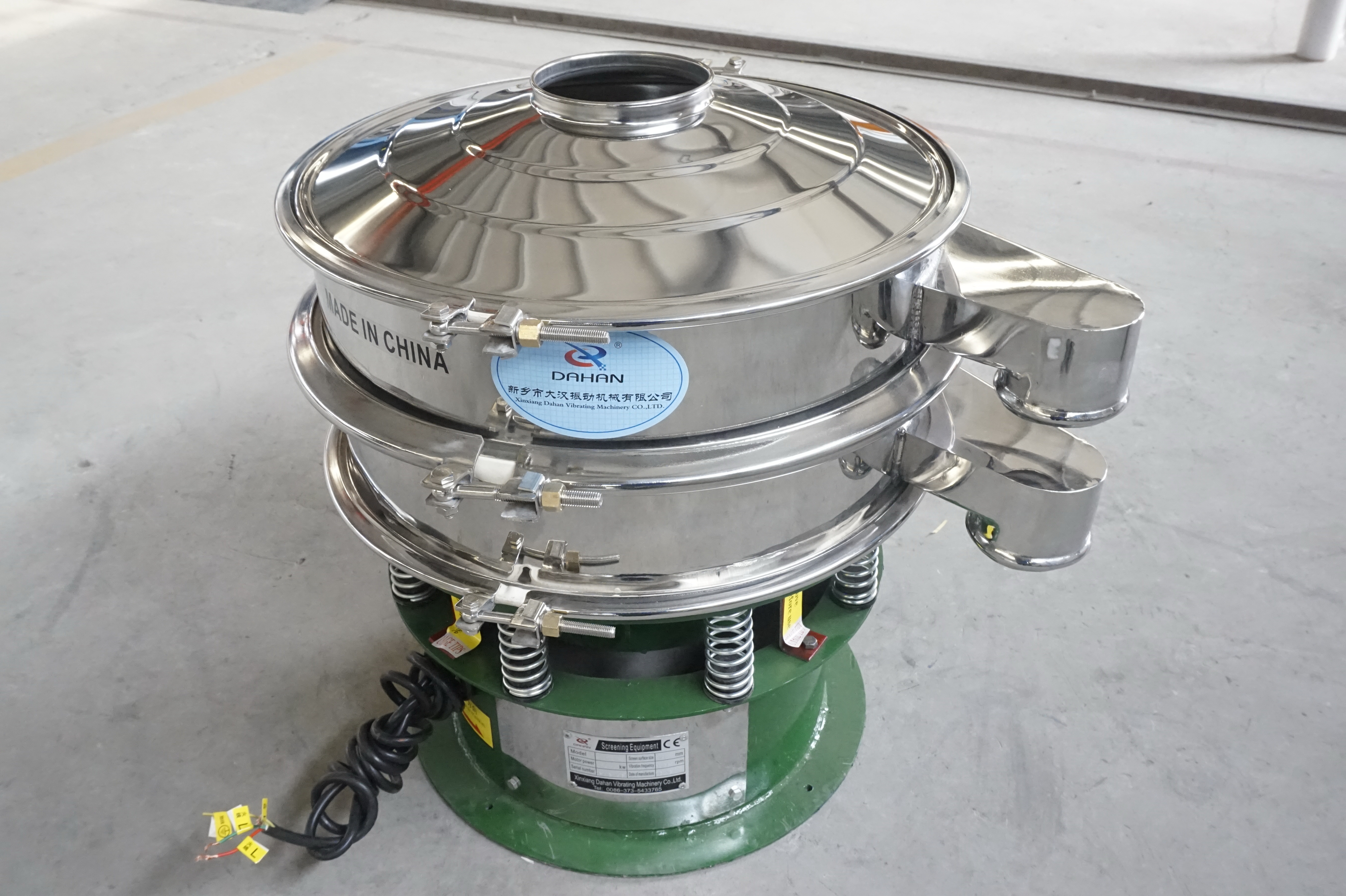
The main parameters of Food grade vibrating screen include the following points:
Screen diameter: commonly 400mm-2000mm, determines the single screening area;
Number of layers: 1-5 layers, can achieve multi-level screening and grading processing;
Motor power: generally between 0.25kW-2.2kW, determines the screening vibration intensity and efficiency;
Screening accuracy: fineness can reach more than 400 mesh, suitable for micro-powder material screening;
Processing capacity: depending on the model, the processing capacity per hour ranges from 100kg to 5 tons;
Equipment material and sealing level: all food contact parts are required to be food-grade materials with good sealing to prevent material leakage and secondary contamination.
These parameters jointly determine the application performance and capacity matching of the equipment in the actual food production process.
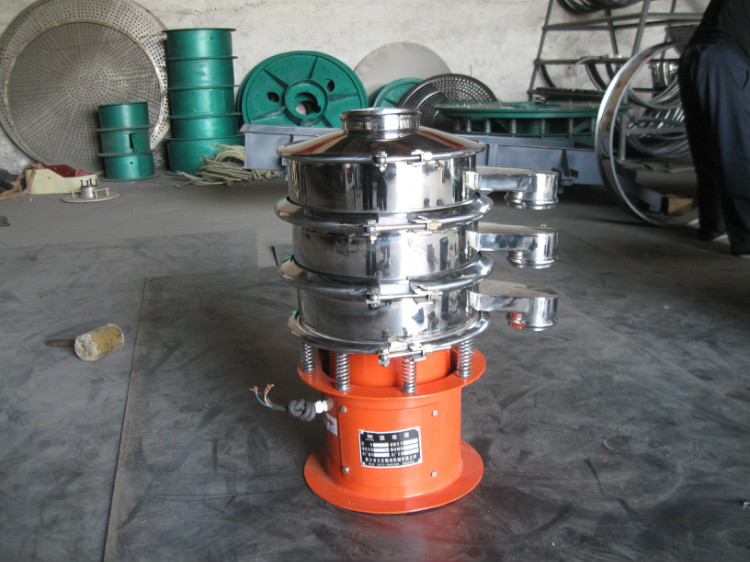
When choosing a suitable Food grade vibrating screen, the following points should be considered comprehensively:
Material characteristics: including material particle size, density, water content, fluidity, etc., determine the selected screening method and screen structure;
Production requirements: select the corresponding diameter and number of layers according to the production volume to ensure processing efficiency;
Sanitary level: For foods that are highly sensitive to hygiene (such as baby food, health products, etc.), 316L material should be preferred and have CIP online cleaning function;
Equipment maintenance: The structure should be simple and easy to disassemble, convenient for daily cleaning and maintenance, and reduce downtime.