

Focus Sifter Machine Production
Screening layer number: 1-5 layers optional
Mesh size: 20-500 mesh optional
Processing capacity: 100-3000kg/h
Motor power: 0.25-3 kW
Vibration frequency: 1440 times/minute
Equipment material: 304 stainless steel
Applicable materials: chemical powder
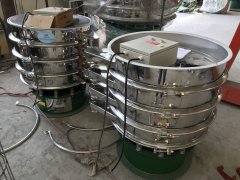
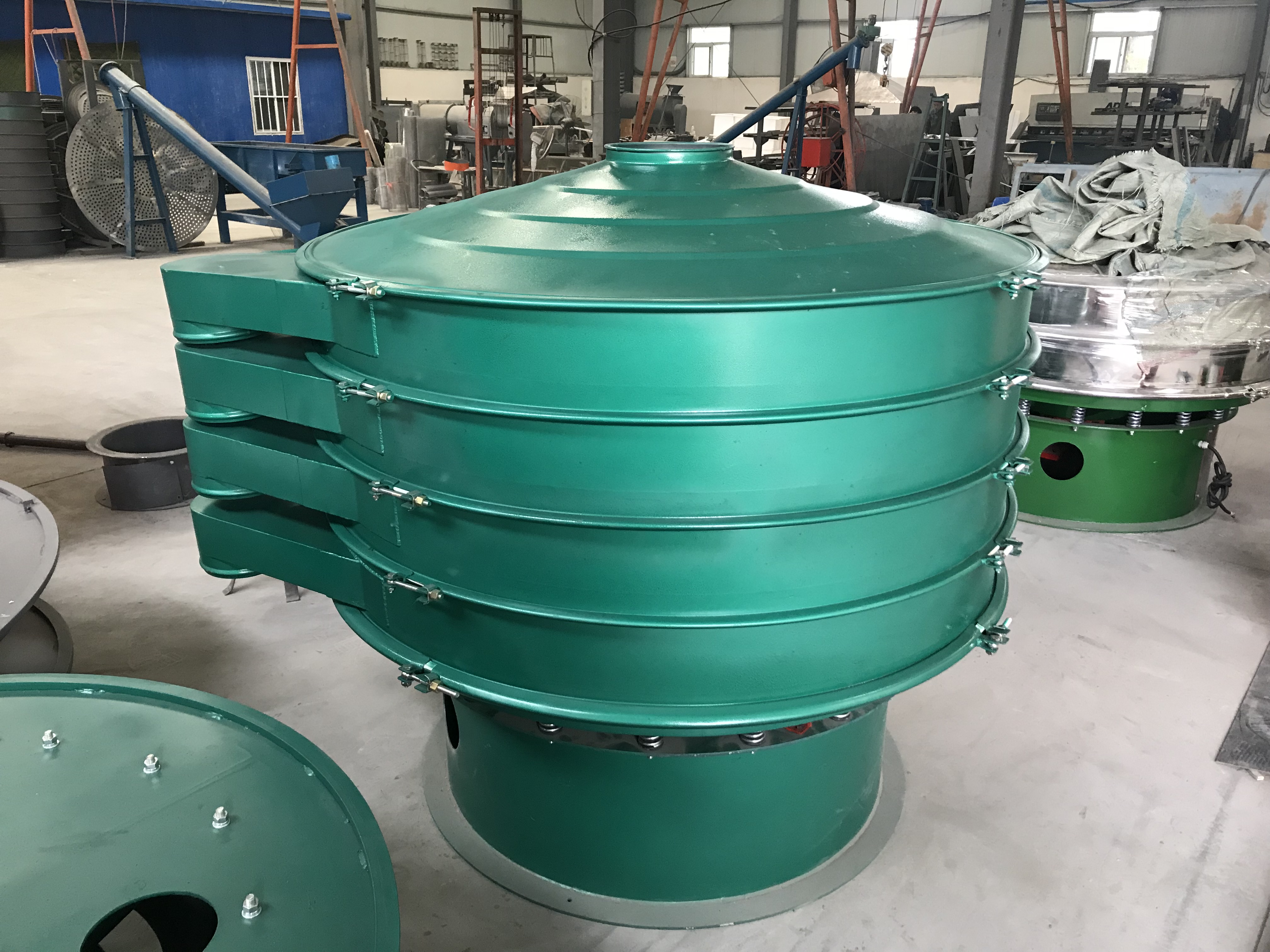
Chemical powder vibrating screen equipment is mainly used for powder screening and grading in the chemical industry. It generates vibration force through a vibrating motor to make the material jump on the screen to achieve the separation of powders of different particle sizes. The equipment is suitable for a variety of fine and ultrafine powder materials such as plastic powder, coating powder, dye powder, inorganic salt, and pharmaceutical powder. The screening mesh range is generally between 10 mesh and 500 mesh, which can meet different screening accuracy requirements. The output ranges from 100 kg/hour to 3000 kg/hour, suitable for production of different scales. Common models are 400mm, 600mm, 800mm, 1000mm, 1200mm and 1500mm. The price varies depending on the model and configuration, usually between US$800 and US$5000, suitable for small, medium and large chemical companies.
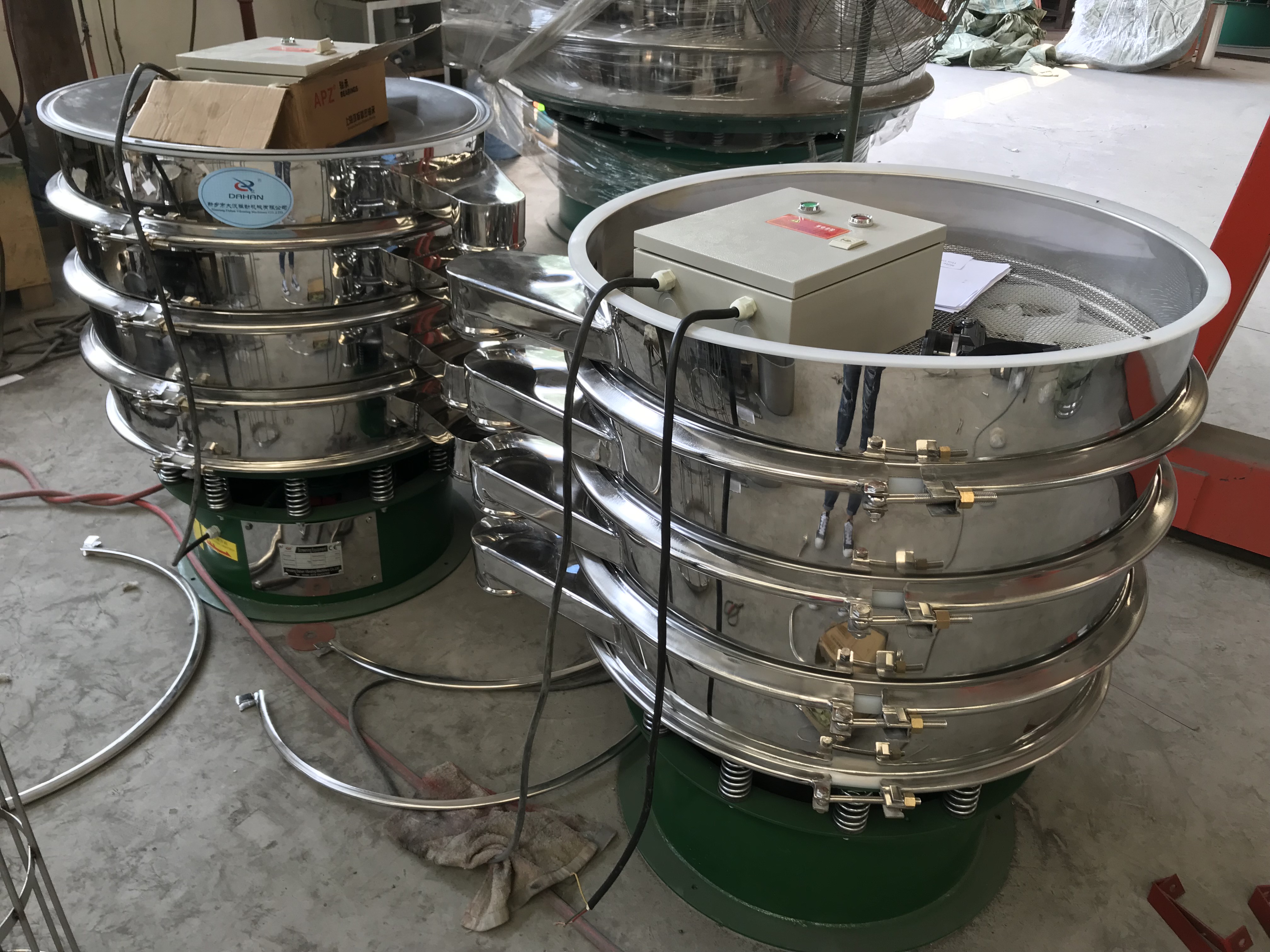
When purchasing chemical powder vibrating screen, you should focus on the following points:
Material characteristics: The particle size, humidity, viscosity and dustiness of the powder directly affect the selection of the screen and the dust-proof design of the equipment.
Production requirements: Reasonably select the screen size and motor power according to the daily output to avoid the equipment being too large or too small.
Screening accuracy: High-precision screening requires the use of fine-mesh screens and multi-layer screening structures.
Material requirements: Chemical powders are mostly corrosive materials. It is recommended to choose stainless steel materials and anti-corrosion coatings.
Comprehensive consideration of the above factors, combined with the manufacturer's technical support and after-sales service, can better ensure the stable and efficient operation of the equipment.
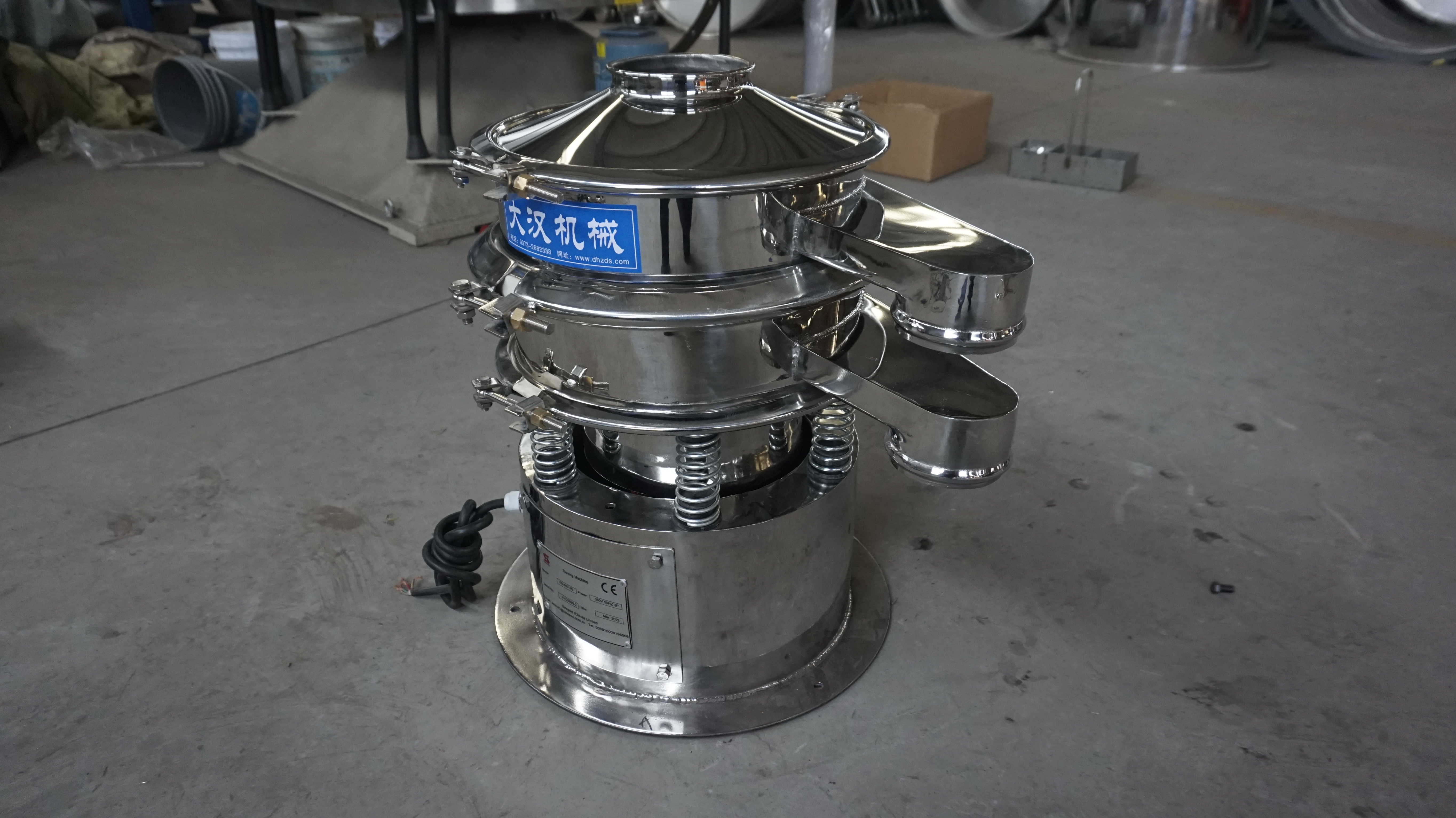
Chemical powder vibrating screen equipment is mainly composed of the following parts:
Vibration motor: This is the core power component of the equipment. It generates strong vibrations through the rotation of the motor to drive the material to move on the screen surface.
Screen frame and screen: The screen frame supports the screen, and the aperture of the screen determines the particle size of the screening. The multi-layer screen design can achieve multi-level screening.
Spring or shock absorber: installed at the bottom of the equipment to slow down vibration transmission and protect the stability of the equipment structure.
Casing and bracket: usually made of stainless steel or carbon steel, with a solid structure to ensure that the equipment is corrosion-resistant and wear-resistant.
Sealing device: prevent dust leakage, ensure environmental protection and safe operation.
The overall design is compact, easy to disassemble and clean, and meets the high requirements of chemical powder for cleanliness and pollution-free.
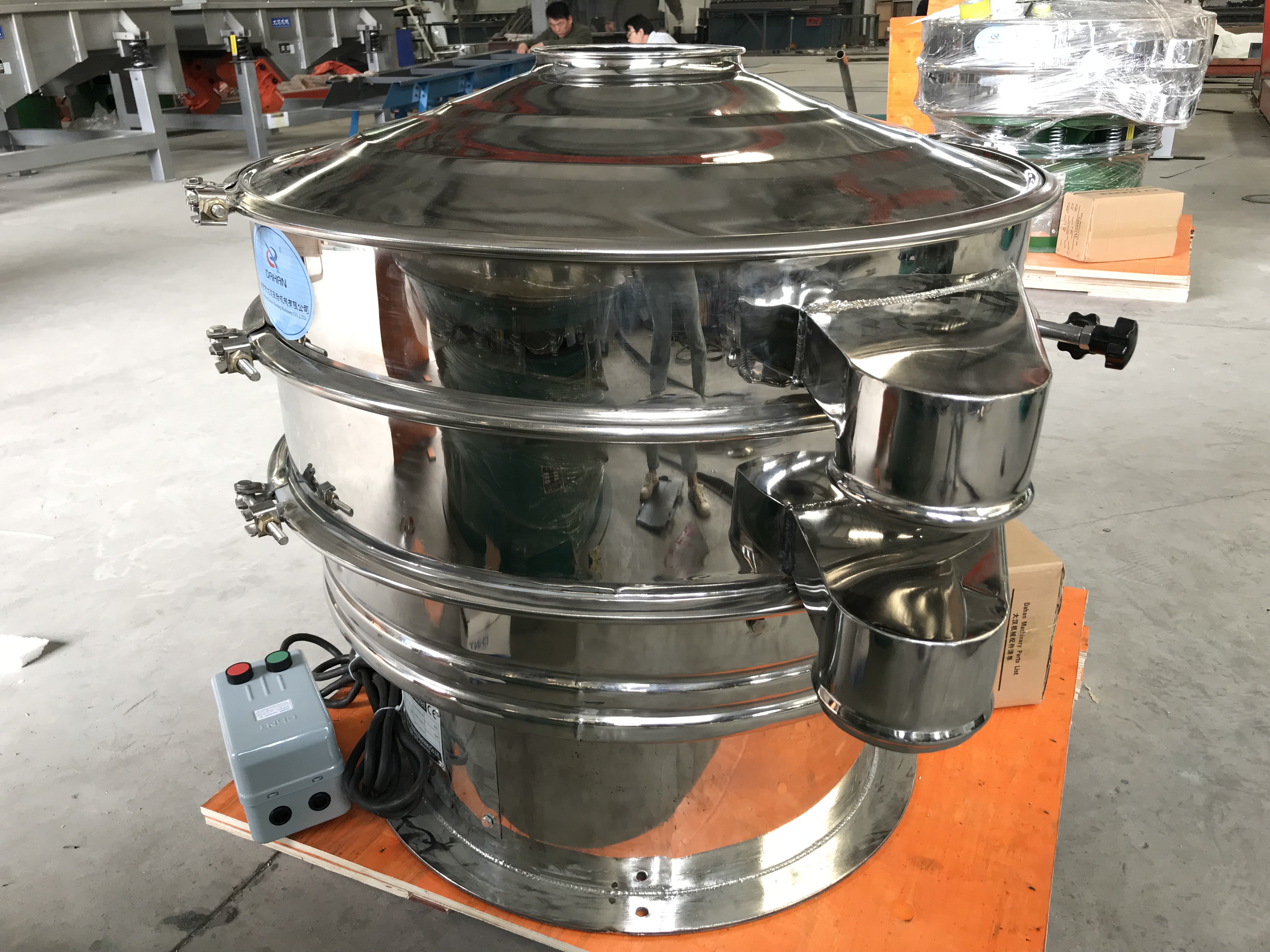
When choosing a chemical powder vibrating screen, you need to pay attention to the following key parameters:
Screen diameter: commonly 400mm to 1500mm, which determines the processing capacity and screening area of the equipment.
Screen aperture: usually in the range of 0.025mm to 5mm, meeting the particle size requirements of different powders.
Vibration frequency: generally 960 to 1440 times/minute, affecting the screening efficiency and fineness of the material.
Amplitude: commonly 1~3 mm, adjusting the amplitude can optimize the screening effect.
Power: Motor power is usually between 0.25kW and 3kW, depending on the equipment model.
Processing capacity: 100kg/h to 3000kg/h, depending on the material characteristics and screen size.
Noise: The design meets environmental standards, and the noise is generally less than 75 decibels.
These parameters determine the scope of application, screening accuracy and output performance of the equipment.
The price of chemical powder vibrating screen is closely related to the output. The higher the output, the more complex the equipment structure and motor configuration, and the higher the price. The approximate price range is as follows:
Small output equipment (100-300kg/h): The price is about 800-1500 US dollars, suitable for small laboratories or start-ups.
Medium output equipment (300-1000kg/h): The price is between 1500-3000 US dollars, suitable for small and medium-sized production.
Large-volume equipment (1000-3000kg/h and above): The price is usually $3000-5000 or even higher, suitable for large production lines and high-precision screening needs.
In addition, multi-layer screens, multi-frequency vibration, automatic screen cleaning and other functions will increase the cost of the equipment. When purchasing, it is recommended to consider the production requirements and screening accuracy comprehensively to avoid blindly pursuing high-end configurations that lead to excessive costs.